CALGARY, AB (June 02, 2026): NGIF Accelerator has been approved as a registered program for funding emissions reduction under Canada’s Clean Fuel Regulations (CFR). Its new program, the Industrial Fuel Compliance Fund (IFCF), will provide regulated fuel suppliers, industry innovators, and technology developers with opportunities to deploy technologies that advance emissions reduction.
Under the CFR, fuel suppliers must meet annual requirements for reducing carbon intensity. Suppliers may contribute up to 10 percent of their annual compliance obligation to approved programs that fund projects that deliver measurable emissions reductions in Canada. The IFCF, administered by NGIF Accelerator, will reinvest these compliance contributions, ensuring measurable, near-term emissions reduction that helps Canada meet its environmental targets.
The program will operate through two funding tracks designed to support both industry-led capital projects and start-up-led technology and innovation projects.
Track 1 – Primary Supplier Reinvestment Projects (continuous intake):
Primary fuel suppliers may reinvest up to 100 percent of their annual compliance obligation into their own emissions-reduction projects, supporting the design, construction, and operation of new facilities or technologies that reduce emissions. This stream utilizes flexible agreements to efficiently manage project capital and guarantee a continuous funding runway across multi-phase construction schedules.
Track 2 – Competitive Innovation Projects (annual intake):
Primary fuel suppliers may reinvest up to 100 percent of their annual compliance obligation into competitive projects. This stream enables technology developers and startups to deploy next-generation fuel and emissions-reduction solutions across the fuels value chain.
Funding through the IFCF will support a wide range of technologies, including:
- Renewable natural gas production and integration
- Low-carbon and zero-carbon hydrogen production and use
- Small-scale LNG and alternative fuel infrastructure
- Carbon capture, utilization, and storage (CCUS)
- Methane emissions reduction technologies
- Energy efficiency and waste-heat recovery
- Low-carbon heat and power systems
- Advanced biofuels and renewable fuels
The IFCF will be administered by NGIF Accelerator, uniquely positioned to help primary fuel suppliers meet their CFR compliance obligations through an industry-led platform that delivers measurable emissions reductions. Supported by Canada’s leading oil and natural gas producers, energy pipeline operators, and natural gas utilities, NGIF identifies, evaluates, and funds emissions reduction projects in real industrial environments where results can be measured, validated, and scaled.
For more than a decade, NGIF Accelerator has worked with industry partners to advance commercially relevant technologies across methane abatement, carbon capture and storage (CCUS), hydrogen, renewable natural gas (RNG), industrial energy efficiency, clean heat and power, and waste-to-value solutions. Through its proven governance model, national operator network, and strong pipeline of deployment-ready projects, NGIF provides primary suppliers with a trusted pathway to transform compliance obligations into measurable emissions reductions, a proven platform to administer the Industrial Fuels Innovation Fund.
About the Industrial Fuel Compliance Fund (IFCF)
The IFCF, a subsidiary of NGIF Accelerator, is a registered Emissions Reduction Funding Program under Canada’s Clean Fuel Regulations. It offers primary fuel suppliers a voluntary option to meet up to 10 percent of their annual carbon intensity reduction requirements through contributions that are reinvested into Canadian clean fuel projects.
About NGIF Accelerator
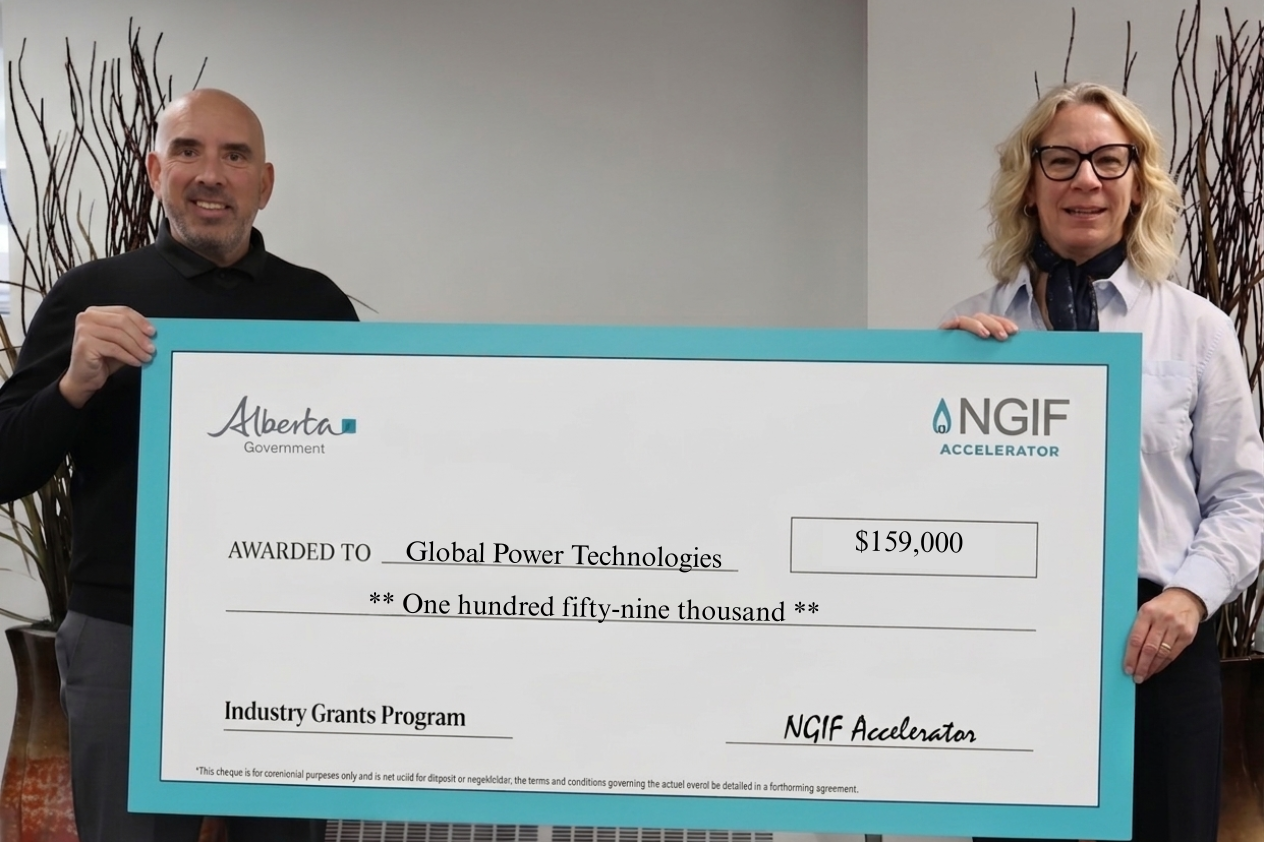
NGIF Accelerator is the not-for-profit arm of NGIF Capital and operates all of the latter organization’s technology and innovation programs. The NGIF Accelerator mandate is to de-risk and accelerate technology development by supporting startups through their pilot projects, field trials, and industry validation. It coordinates with federal and provincial governments to co-fund projects to advance market commercialization. NGIF Accelerator currently operates the Industry Grants program and administers the NGIF Emissions Testing Centre program.
Fund Information:
John Adams
President and CEO, NGIF Accelerator
Media Information:
Ayoola Ajibare
Communications and Content Strategy,